
Homecoming is the first time most teenagers own something genuinely delicate. A dress with a lining and a zipper, a jacket that needs pressing, shoes that have never been outside. Then it all comes home at midnight and gets put on a closet floor.
Formal wear fails differently from everything else in a laundry room. The mistakes are not gradual, they are single events, and most of them happen in the twelve hours after the dance rather than during it.
What to do that night
Five minutes before bed saves the garment. This is the whole article, honestly.
Hang it up. Not over a chair, not on the floor. A padded or wide hanger for anything with structured shoulders, a clip hanger by the waistband for a skirt or trousers.
Let it air out before it goes in a garment bag. A dress worn for six hours is carrying moisture, and zipping it into a bag traps that against the fabric all night. Hang it in open air for a few hours first.
Deal with spills now, not tomorrow. A fresh stain is a different problem from a set one, and formal fabrics are unforgiving. Blot with a clean white cloth, never rub, and work from the outside of the mark inward.
Check the hem and the seams. A dance is hard on a hem. A few loose stitches found now is a five minute repair, and a hem left hanging tears further the next time it is worn.
Read the label before you do anything
Formal wear is where care labels stop being advisory.
Dry clean only on a lined or structured garment means it. Linings, interfacing, and shoulder structure are frequently held with fused adhesive, and water releases it. The result is a garment that ripples and never lies flat again.
“Dry clean” without the “only” is a recommendation rather than an instruction. Plenty of unlined polyester dresses say dry clean because the manufacturer is limiting liability, and they hand wash fine.
The distinction is worth knowing, and it is the single most useful thing on a care tag.
By fabric, broadly: polyester and unlined synthetics usually hand wash. Silk, acetate, rayon, velvet, taffeta, anything lined or beaded, and anything with structure go to a cleaner.
Stains, by what actually happens at a dance
Treat carefully and expect to hand the job over if it resists.
Makeup on a neckline or a collar. Nearly universal. Foundation and bronzer are oil stains. A tiny amount of liquid dish soap on a fingertip, dabbed, ten minutes, then blotted with a damp cloth. Micellar water on a cotton pad also lifts foundation and is gentler.
Deodorant marks. A dryer sheet rubbed gently over the mark, or a piece of the garment’s own fabric rubbed against it, lifts most white transfer without water.
Punch and soda. Dye stains. Cold water immediately, blotted from the back if you can reach it. Do not use hot water and do not let it dry.
Grease from food. Dish soap, dabbed, then blotted. Cornstarch pressed onto it absorbs oil if you cannot treat it properly yet.
Sweat at the underarms. The one that quietly ruins formal wear, because it oxidizes over months in storage into a stiff yellow mark. Treat it the same night with dish soap, even if nothing is visible.
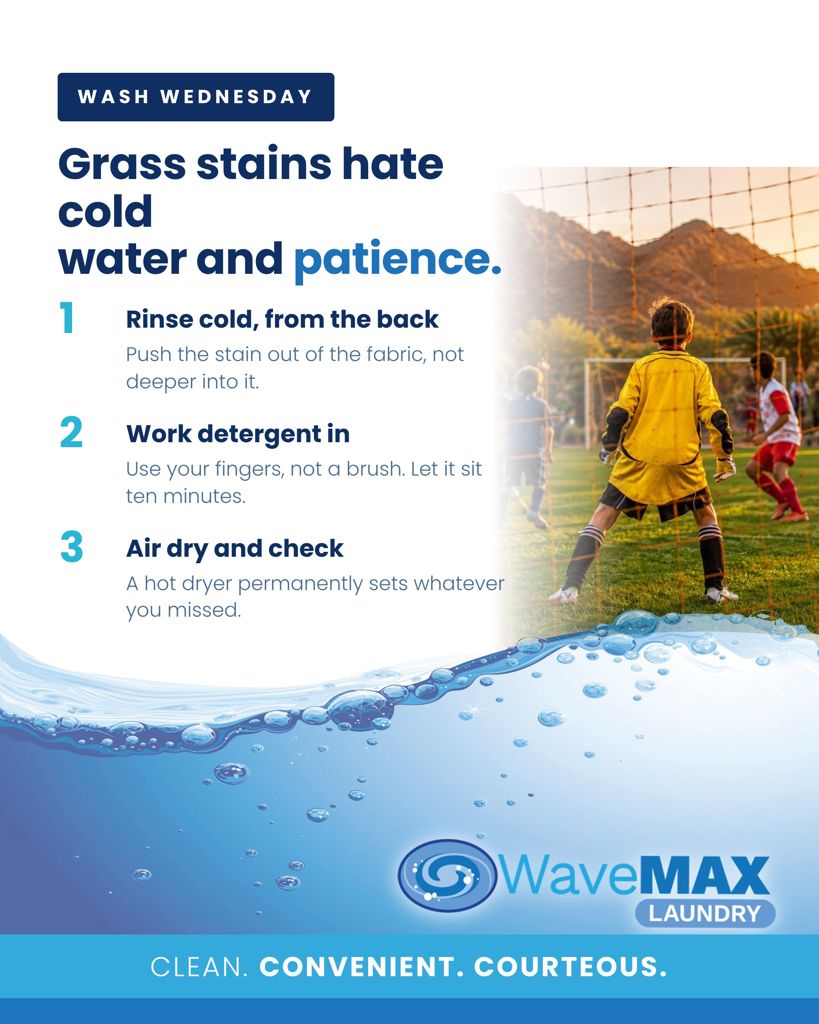
Grass and mud from photos on a lawn. Grass wants cold water and contact time. Mud should dry and be brushed off. On a delicate fabric, both are a job for a cleaner rather than for a brush.
Anything on silk, velvet, or a beaded panel. Blot with plain cold water and stop. Take it to a cleaner and tell them exactly what it is. Home treatments on these fabrics cause water rings and crushed pile that are worse than the original stain.
Hand washing, when the label allows it
For unlined polyester and similar.
Cold water, a small amount of gentle detergent, in a clean sink. Submerge and press gently with your hands. No wringing, no twisting, no scrubbing.
Let it sit five to ten minutes, then drain and rinse in clean cold water until no suds appear.
Lift it out supporting the whole garment, because wet fabric is heavy and lifting by a shoulder stretches the seam permanently.
Press water out between two clean towels, then dry flat on a fresh towel out of direct sun. Never hang a wet formal garment, which stretches under its own weight.
Pressing without damage
Steam rather than iron wherever possible. A steamer relaxes wrinkles without contact, which is what most formal fabrics want.
If you must iron, use the lowest setting that works, always with a pressing cloth between the iron and the fabric, and test on an inside seam.
Never iron velvet, which crushes permanently. Steam it from the inside, hanging.
Never iron directly over beading, sequins, or metallic detail, which melt.
Storing it properly
Most formal wear is worn once and then stored for a year, which is when the damage happens.
Clean it before storing. Non-negotiable. Invisible residue oxidizes into permanent stains over months, which is why a dress put away looking fine comes out yellowed.
Use a breathable cotton garment bag, never plastic. Plastic traps moisture and the plastic itself can yellow fabric over time. The bag from the dry cleaner is for transport, not storage.
Pad the hanger, and for a heavy dress, sew ribbon loops into the waist seam so the weight hangs from the waist rather than the shoulders.
Store somewhere with stable temperature. Not an attic, not a garage. Heat and humidity swings degrade fabric and adhesive.
Acid-free tissue in the folds of anything that must be laid flat.
Shoes and accessories
Wipe shoes down the same night. Scuffs on satin shoes are frequently fixable when fresh and permanent when set.
Stuff them with tissue to hold the shape and store them out of a plastic bag.
Jewelry goes back in a box rather than in a bag with everything else.
A boutonniere or corsage pin left in a lapel will rust and stain the fabric. Take it out.
Where the machines help
The dress goes to a cleaner. Everything around a dance is ordinary laundry and there is more of it than people expect: the shirt worn underneath, the towels, the bedding after a house full of people getting ready, and whatever got spilled on during the pre-dance photos.
The machines at our self-service laundry on Schubert Road run in parallel and take bedding and towels in one pass rather than four household loads, which is useful the weekend a house hosts a group.
Our wash-dry-fold service covers the everyday side of it if the weekend has the household behind.
The short version
The damage happens in the twelve hours after the dance, not during it. Hang the garment on a padded hanger, let it air out before it goes in a bag, and treat every spill that night rather than tomorrow. Dry clean only on a lined or structured garment is a real instruction, since water releases fused interfacing. Treat underarms with dish soap even when nothing is visible, because sweat oxidizes into a permanent yellow mark in storage. Clean it before it goes away for the year, and store it in a breathable cotton bag rather than plastic.
WaveMAX Knoxville is at 5210A Schubert Rd, easy to reach from north Knoxville and the surrounding area. If something came home from a dance with a mark and you are not sure what to do first, call us at (865) 985-0152 before you try anything.