
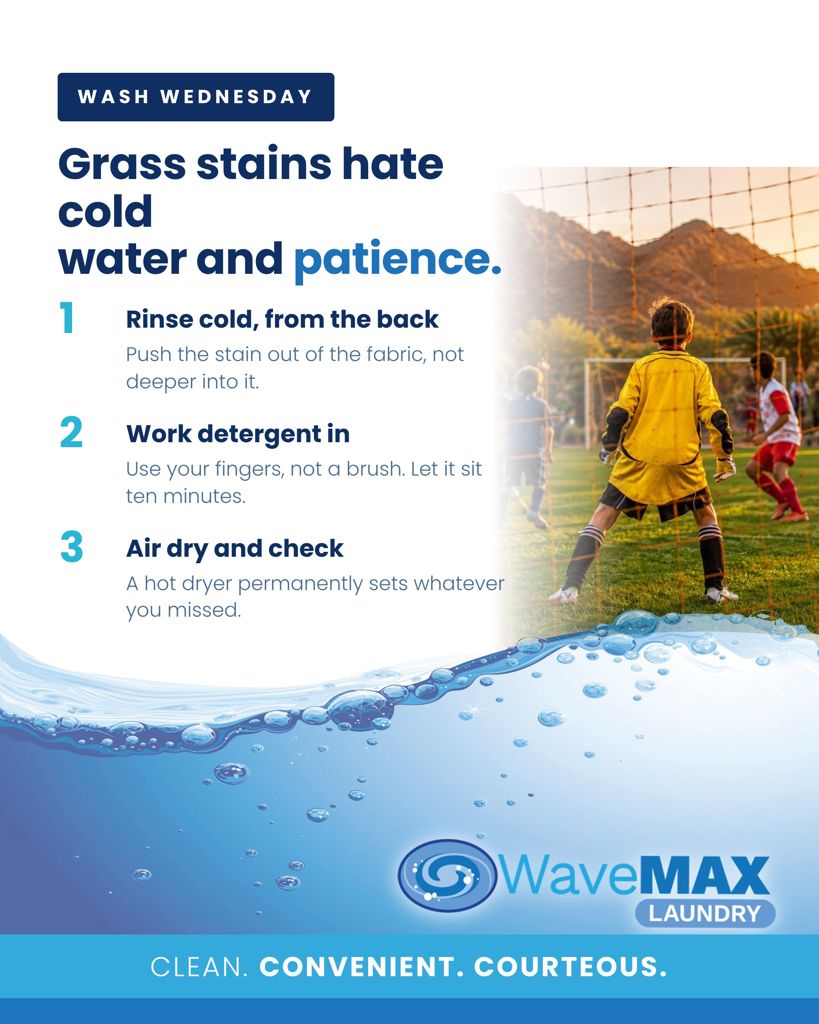
The uniform gets washed. The rest of it never does.
Shin guards, cleats, pads, mouthguard cases, water bottles, and the bag everything lives in are where the real problem is, and most of them cannot go in a washing machine at all. Which is why a kid can have a perfectly clean jersey and still smell like a locker room ten minutes after getting dressed.
None of this takes long. It just takes knowing which method goes with which item.
Shin guards, elbow pads, and anything with foam
These sit directly against skin for two hours at a time and absorb more sweat than the uniform does.
Hand wash in warm soapy water. Fill a sink, use a small amount of regular detergent or dish soap, and scrub with a soft brush or a cloth. Two minutes each.
Rinse thoroughly. Foam holds detergent, and detergent left in foam holds odor and irritates skin.
Squeeze rather than wring. Wringing tears foam internally where you cannot see it.
Air dry completely, which takes longer than you think. Stand them up so air reaches both sides. Foam that is dry on the surface can still be wet inside, and putting damp gear back in a bag is how the smell comes back the same week.
Never a dryer. Heat melts foam, warps the hard plastic shell, and separates any glued layer.
Some shin guards have a removable fabric sleeve. Those go in the machine on gentle in a mesh bag. The hard guard itself gets hand washed.
For gear that already smells, soak in a solution of one part white vinegar to four parts warm water for thirty minutes before washing.
Cleats
Cleats are the single most abused item and the most commonly ruined by good intentions.
Knock the mud off outside once it is dry. Bang the soles together. Wet mud smeared around with a brush goes into the seams and the uppers.
Pull the insoles out every time. This is the step nearly everyone skips. The insole is where most of the moisture and most of the smell live, and a shoe dried with the insole in place stays wet underneath it.
Wash the uppers by hand with warm soapy water and a soft brush. Synthetic uppers take this easily. Leather cleats want a damp cloth and a leather conditioner afterward rather than a soaking.
Never put cleats in a washing machine or a dryer. The soles on almost all athletic shoes are glued, and both heat and tumbling separate that bond. A pair of cleats can survive a season of play and be destroyed by one dryer cycle.
Dry them stuffed with newspaper or paper towel, changed once, in a spot with air movement. Not in direct sun, which cracks synthetic uppers, and not near a heater.
Own two pairs of insoles and alternate. Cheap, and it means a dry shoe every time.
For persistent shoe odor, baking soda left inside overnight works. So does putting them in a sealed bag in the freezer, which kills the bacteria without heat.
Helmets and hard equipment
The shell gets wiped with a damp cloth and mild soap. Nothing abrasive, nothing solvent based, since some cleaners degrade the plastic and can void a certification.
The padding inside is where the smell is. Many helmets have removable pads that hand wash and air dry. If they are not removable, wipe them with a cloth dampened in a mild soap solution, then a clean damp cloth, then leave the helmet sitting open so it dries fully.
Chin straps are usually removable and washable. Nobody ever removes them.
Never put any protective equipment in a dryer, and never use heat to speed it up. Heat can compromise the impact foam that makes the equipment protective in the first place.
Mouthguards, bottles, and the small things
Mouthguards rinse in cold water after every use and get brushed with a toothbrush and a little soap weekly. Store dry in a vented case, never in a sealed bag. Never hot water, which warps the fit.
The case itself needs washing too, and it almost never gets it.
Water bottles come apart. The lid gasket is the part that grows things and the part nobody removes. Take it out, wash it, dry it separately. A bottle stored assembled and damp develops a film in a week.
Towels used at practice are ordinary laundry, but wash them separately from performance fabric, since towel lint clings to polyester.
The bag, which is the source
You can clean everything above and put it all back into a bag that has never been washed, and the smell returns immediately.
Empty it completely, including the pockets nobody uses.
Most sports bags are machine washable on gentle, cold, in a mesh bag or a pillowcase, with the zippers closed. Check the tag. If it has a rigid frame or a rubberized bottom, hand wash instead: warm soapy water, a brush, inside and out.
Never in a dryer. Hang it upside down with every pocket open and leave it until it is bone dry, which takes a day.
Then change the habit that caused it. Unpack the bag the day it comes home, every time. A closed bag with damp gear in it is a warm, dark, humid environment with a food source, and in a Central Texas August it turns fast.
A cheap mesh laundry bag inside the duffel for wet items helps considerably. So does leaving the bag unzipped in the garage rather than zipped in a closet.
A schedule that holds
After every use: pull insoles, take everything out of the bag, hang the wet things.
Weekly: shin guards and pads hand washed, mouthguard brushed, bottle disassembled and washed.
Monthly: the bag itself, and the helmet padding.
End of season: everything cleaned and fully dried before it goes into storage, because gear stored dirty and damp is gear that is unusable next year.
Where the machines help
The soak is the strongest tool for gear that already smells, and household machines and kitchen sinks are both poor at it. A sink is too small for a bag and a set of pads at once, and a home washer drum holds a limited amount of water, so a vinegar soak barely circulates.
The machines at our self-service laundry on Olaf Drive hold considerably more water and have the drum size to run bags, towels, and washable gear properly rather than packed. Running gear separately also keeps mud and rubber out of the machine your household laundry uses.
Nou wash-dry-fold service covers the everyday laundry if a season has the household behind.
The short version
Nothing protective goes in a dryer, because heat melts foam, separates glued soles, and can compromise impact padding. Shin guards and pads hand wash in warm soapy water, rinse thoroughly, and air dry standing up until they are dry inside. Pull cleat insoles every single time and never machine wash cleats. Mouthguards get cold water and a toothbrush, bottles come apart at the gasket, and the bag itself is usually the source of the smell. Unpack the bag the day it comes home, every time.
WaveMAX Temple on Olaf is at 10 Olaf Dr, easy to reach from Temple, Belton, and the surrounding area. If gear has picked up a smell you cannot shift, call us at (254) 295-0239 before you replace it.