
Somewhere in most kitchens there is a cloth that comes out once a year. It gets used hard for an afternoon when the fruit is in and the jars are being filled for people, and then it goes back in a drawer. By the time it comes out again it has gone stiff along the fold lines, taken on a brownish cast it did not have before, and lost the soft surface that made it work in the first place. The season is the only time anyone looks at it closely enough to notice. It is worth understanding what is actually in that cloth before deciding what to do with it.
What a Jelly Bag Is Made to Do
A jelly bag is a cone of close woven cotton, often flannel, hung point down so juice can drip through under its own weight. The weave is tight on purpose. It is fine enough to stop pulp and fruit solids while still letting liquid pass, and the whole reason a strained juice runs clear rather than cloudy is that the fine solids never get through.
Flannel versions do more than the weave alone. The raised nap on the inner face gives the cloth a furry surface, and fine particles catch on those raised fibers rather than reaching the weave at all. It is a depth filter, not a sieve. The particles end up distributed through the thickness of the cloth instead of sitting in a layer on the surface.
That is also precisely why the cloth is hard to clean. Anything held inside the thickness of a napped fabric is held by a great many fiber ends at once, and rinsing from one side pushes it further in as often as it pushes it out. The feature and the problem are the same thing.
A good bag is also not squeezed. Pressing it forces solids through and clouds the juice, and it mats the nap down permanently. A bag that has been wrung out hard once filters noticeably worse the next time, because the raised surface it depended on has been flattened into the weave.
The Soil Is Sugar, Pectin and Pigment
Pectin is the substance that makes a jelly set, and it is a long chain sugar that occurs naturally in fruit, concentrated in skins and cores. In the presence of sugar and fruit acid it links into a network that traps water and holds a shape. That reaction does not care whether it happens in the jar or in the cloth, and in the cloth it happens everywhere the juice touched.
Dried, that network goes hard and glassy. It is not a stain in the normal sense, because there is no color to it. It is a thin varnish filling the spaces between fibers, and it is what makes an old bag feel like paper along the creases. A patch that has gone hard has pectin set through its full thickness.
The color is a separate matter. The red and purple pigments in fruit are water soluble and have a strong affinity for cellulose, so they bind to the cotton directly. They also change color with acidity, which is why the same cloth can look pink in one spot and bluish gray in another. Tannin from skins and stems adds a tea colored background over the top.
Fruit solids themselves are the easy part. Pulp, skin fragments and seed debris are physical soil, and they rinse out readily while everything is still wet. Left to dry, they are cemented in place by the pectin that dried around them, and from then on they come out only with the pectin.
Why Hot Water Right Away Matters
Sugar and pectin are both soluble in water. While they are still wet they will go into a rinse without any help, and a bag rinsed immediately comes out close to clean with nothing but water and hands. The difficulty is entirely about timing, not chemistry.
Once the cloth dries, the pectin network sets and the dissolved sugar crystallizes between the fibers. Water still gets at it, but far more slowly, because the water has to work in from the surfaces of a hard glassy film rather than mixing with a liquid. What took two minutes at the sink becomes an hour of soaking, and some of it never comes back at all.
So the sequence is: turn the bag inside out, rinse it under the hottest water the tap gives, from the inside face outward, and keep going until the water runs clear. Hot water helps because warmth makes the pectin network swell and loosen rather than stay rigid. Do all of this before the bag has a chance to dry anywhere.
Hold the detergent back at first. Water alone handles sugar, pectin and pulp, and the less detergent the nap ever sees the better. If there is still an oily or waxy feel from fruit skins after rinsing, then a small amount of plain detergent on that area, worked in and rinsed thoroughly twice, is reasonable. Never use fabric softener on it at all.
Why It Must Not Go In With Clothing
The first reason is pigment. Fruit color that has bound to the cotton of the bag can release again in a warm drum, and once it is loose in the water it is free to bind to anything else made of cellulose. Everything light colored in that load is at risk, and the resulting tint is even and all over rather than a mark you can treat.
The second reason is residue. A bag with sugar in it is tacky, and tacky fabric takes on lint from every other item in the drum. It comes out gray and fuzzy, and the nap it filters with is now full of fiber from other people’s sweaters. That nap is the working part of the cloth.
The third reason is what the drum leaves behind in the bag rather than what the bag leaves in the drum. Detergent and softener lodge in a napped cotton surface and are hard to rinse out of it completely. Softener in particular coats the fibers to lie smooth, which closes up the nap and reduces its ability to catch fine particles. The cloth then goes back on duty carrying all of that into food.
Add the mechanical side and the case is closed. Tumbling mats the nap, agitation drives set pectin deeper rather than out, and a damp cone of heavy cotton wraps itself around whatever else is in there. This is a sink job, done by hand, every time.
Storing It So It Works Next Time
Dry it fully and dry it open. Hang it so air reaches both faces, spread the point out rather than letting it fold on itself, and give it a day. A heavy cotton cone holds water in the seam long after the body of it feels dry, and a cloth that goes into a drawer still damp will sour and go blotchy.
Store it loose and dry, not sealed in plastic. A paper bag or an open drawer is better than anything airtight, because trapped moisture has nowhere to go. Folding it the same way every year creates permanent creases where pectin has set, and those creases are where the cloth eventually splits.
Some marks are permanent and that is all right. Pigment bound into cotton is cosmetic. A faintly stained bag filters exactly as well as a white one, and nothing about the discoloration transfers into a clear juice. Judging a bag by its color leads people to throw away cloths that still work perfectly.
Stiffness is the real verdict. A stiff patch can often be soaked out in plain hot water over an hour or two, changing the water once. But a bag that has gone hard through the whole cloth, or whose nap has matted into a smooth shiny surface, will not filter clear again no matter how clean it gets. At that point it is a rag, and it is worth starting the next season with a new one.
Putting Up Fruit in Marietta Kitchens
This is the stretch of the year when Marietta kitchens turn out jars for other people. Fruit that was put up earlier gets worked through, something gets made for a gathering, and small jars go out as gifts. The straining cloth that was washed and put away comes back into use for one busy afternoon, and then everything else in the kitchen demands attention and the cloth gets left in the sink.
That delay is the whole problem, and the local air makes it a little worse. In a humid climate a cloth left wet in a warm kitchen does not dry, it simply stays wet, and a wet cotton cone full of sugar goes sour faster than anyone expects. Rinsing it out at the sink before you sit down to eat is the single habit that saves it.
So treat it as part of the afternoon’s work rather than something to handle later. Rinse hot, inside out, until the water runs clear, then hang it open somewhere the air moves and leave it there overnight. Keep it out of the washing machine entirely, and it will be ready for the same job next year without any rescue work.
For Everything Else From the Kitchen
The straining cloth stays at the sink, but the rest of what a busy kitchen generates does not. Aprons, towels, dish cloths and the table linen from a long meal all want warm water, a full dose of detergent and a drum with real room in it, which is a different job altogether.
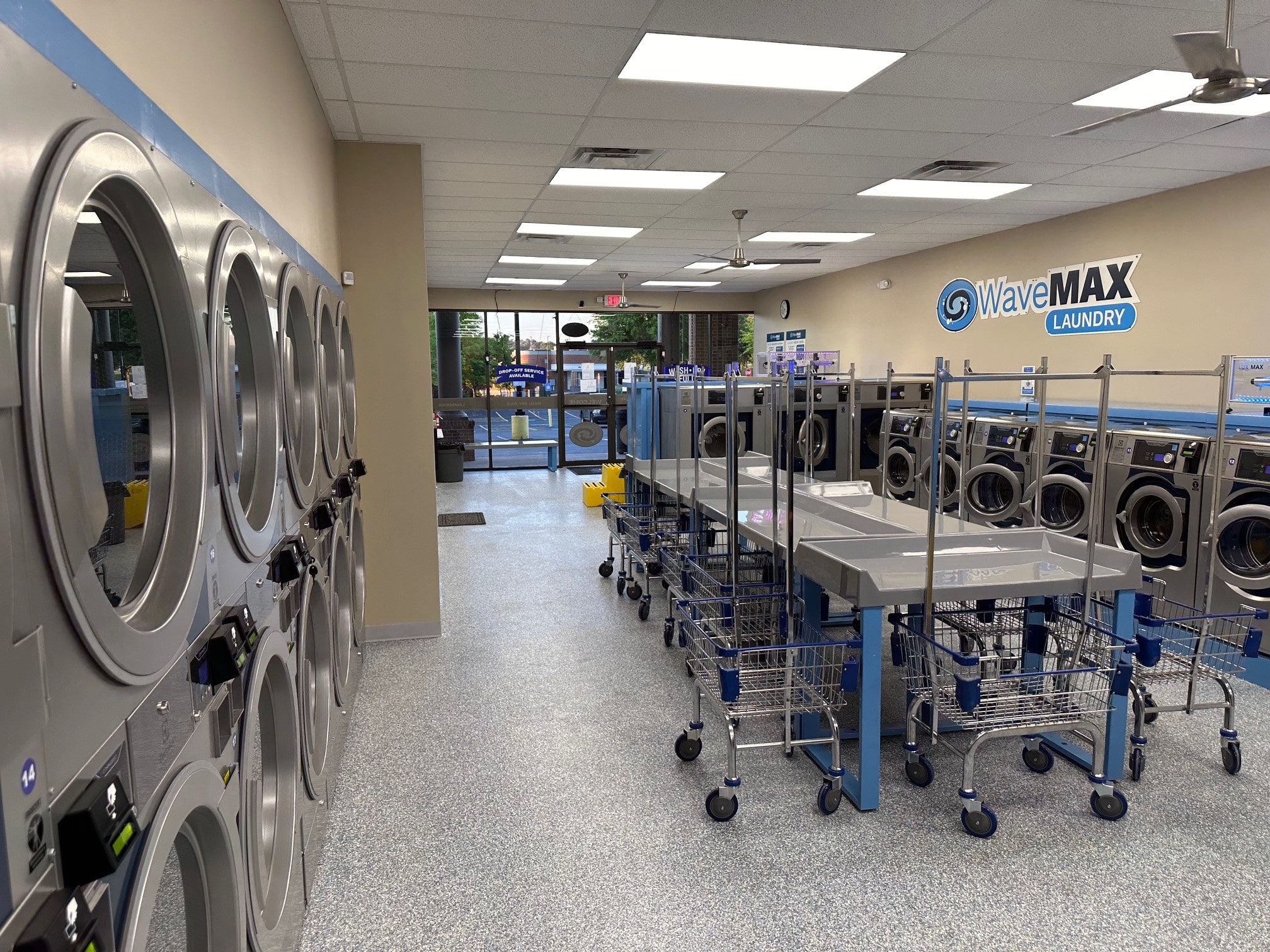
The machines at our self-service laundry on Cobb Parkway take the aprons, towels and table linen that pile up through the season, with enough capacity that a kitchen load can tumble freely in warm water instead of sitting packed in a corner of a drum that is too small for it.
Our machines and the store are cleaned daily.
Our wash-dry-fold service covers the everyday laundry.
For general guidance, The American Cleaning Institute publishes a stain removal guide that is a useful cross-check.
The short version
A straining cloth works because its close weave and raised nap hold fine fruit solids inside the fabric. The soil is sugar, pectin and bound fruit pigment, all soluble while wet and all far harder once dry, so rinse it inside out under hot running water straight away and skip the detergent. It should never go in a machine with clothing: the pigment transfers, the tacky surface takes on lint, and softener closes the nap it filters with.
WaveMAX Marietta is at 270 Cobb Pkwy S, easy to reach from Marietta and the surrounding area. If you have a load that will not fit at home, call us at 770-871-1870.