
The blue one is the worst. Then the red, then the purple. Anyone who has dealt with a spilled sports drink on a light shirt knows the color matters, and it matters for a reason that explains why these stains behave so differently from food.
Sports drinks, juice boxes, freeze pops, and slushes all belong to one category, and treating them like a food stain is why they do not come out.
These are dye stains, and dyes are designed to stay
A grease stain sits on top of fibers. A protein stain binds to them. A dye stain is different again: it is a colorant engineered by a chemist to be stable, vivid, and hard to remove, because a drink that faded on the shelf would not sell.
The dyes used in bright sports drinks and freeze pops are the same class of synthetic food dyes used to color fabric in other applications. Which is to say your shirt is doing exactly what it was designed to do when it accepts the dye.
That has three consequences.
Speed matters more than anything else. A dye that has not yet bonded rinses out with water. The same dye an hour later needs real work, and the same dye after a dryer cycle is frequently permanent.
Cold water only. Heat accelerates the bond between dye and fiber. This is the mechanism used to dye fabric deliberately, and hot water on a red sports drink stain is essentially dyeing the shirt on purpose.
Detergent alone is not enough. Detergent lifts soil and emulsifies oil. It does very little to a bonded dye. You need something that breaks the dye molecule apart, which means an oxidizer.
The method
1. Blot the liquid up. Do not rub. Rubbing spreads a small stain into a large one and pushes dye deeper into the weave.
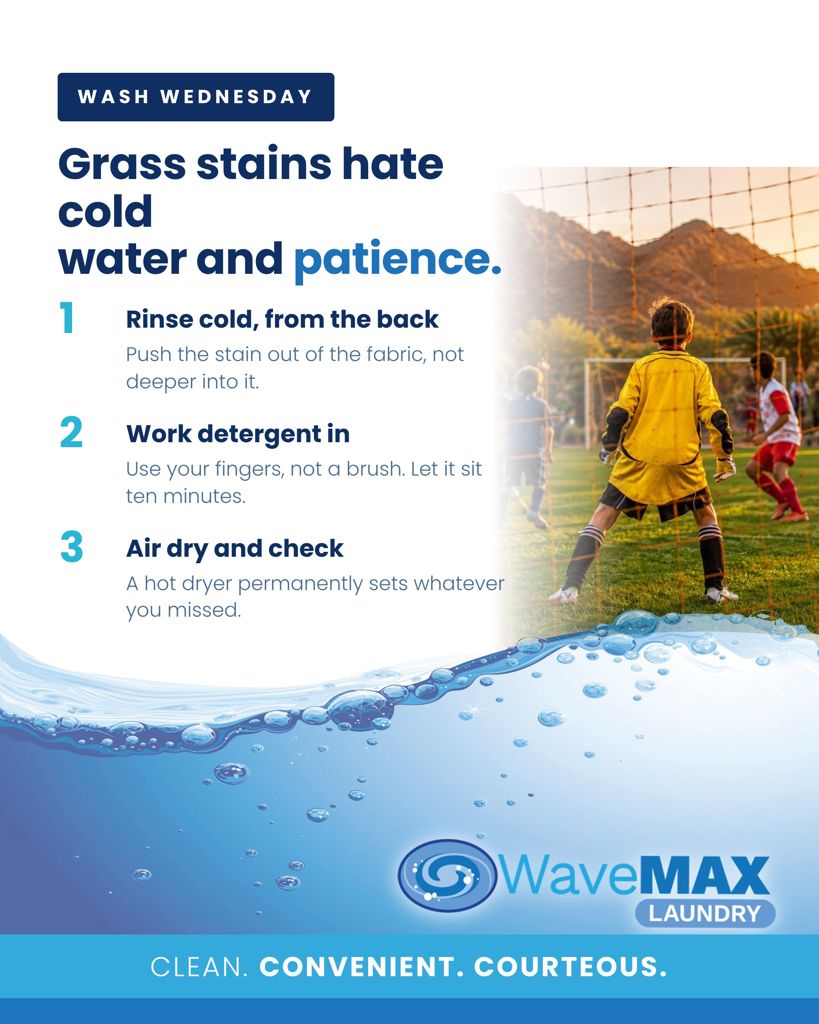
2. Flush with cold water from the back. Hold the fabric inside out under a cold tap and let the water push the dye back out the way it came in. Keep going. Most of a fresh stain leaves at this step, and this is the single most effective thing you can do.
3. Work in liquid detergent with your fingers and let it sit ten minutes.
4. If color remains, soak in oxygen bleach dissolved in cool water. Several hours or overnight for a stubborn one. Oxygen bleach is safe on colors and it works by breaking the dye molecule apart, which is precisely the right tool here.
5. Wash cold.
6. Air dry and inspect in daylight. Wet fabric hides a faint dye stain completely, and this is the checkpoint that decides whether the garment survives.
7. Repeat if needed. Dye stains frequently need two or three rounds, and each one takes more out. None of them work after a dryer cycle.
When you are not at home
Most of these spills happen at a game or in a cafeteria, and what you do in the first two minutes decides most of the outcome.
Blot with anything absorbent. Then get cold water on it, from a bottle, a fountain, a bathroom tap, whatever is available. Volume matters more than technique.
Keep the area wet until you get home if you can. A dye that stays wet has not finished bonding. A dye that dries into the fabric has.
Do not use hot water from a bathroom tap, and do not use a hand dryer on it.
The specific offenders
Blue and red sports drinks. The most stubborn. They frequently need the full oxygen bleach soak, and on white fabric a soak plus sunlight afterward finishes the job.
Freeze pops. Same dyes, more concentrated, and they usually land on a shirt front in summer heat that speeds the bonding. Rinse immediately.
Fruit punch and grape juice. These add tannins to the dye, which respond well to white vinegar. Try a vinegar and cold water soak alongside the oxygen bleach approach.
Orange juice and citrus. Milder, mostly comes out with cold water and detergent, but the sugar left behind will caramelize into a brown mark if the garment is dried. Rinse even when the stain looks gone.
Coffee and tea from a parent’s cup. Tannin stains. Cold water, then a vinegar soak, then oxygen bleach if needed. Never soap first on coffee, which can set it.
Snow cones and Gatorade slush at a summer game in Austin heat. Treat as the worst case and get water on it within seconds.
The sugar problem nobody mentions
Even when the color comes out, sugar stays in the fabric.
Sugar is invisible when wet and invisible when it first dries. Over weeks it oxidizes into a yellow-brown mark, which is why a shirt can come out of the wash apparently clean and develop a stain in the closet.
The fix is simply to rinse thoroughly rather than stopping when the color disappears. Run an extra rinse on anything that had a sugary drink on it.
This is also why a shirt put away after a summer of spills comes out of storage in the fall with marks that were not there in May.
Prevention that actually works
Bottles with a real seal rather than a screw cap that a kid closes loosely.
Water rather than a colored drink where it makes no difference. Most of a school day does not require electrolytes.
The clear or light-colored versions of sports drinks exist and stain far less.
A dark or patterned shirt on a game day if there is a choice.
Where the machines help
The oxygen bleach soak is the tool that actually removes a set dye stain, and household washers are the wrong shape for it. The drum holds a limited amount of water, so a garment sits packed against itself and the solution never circulates through the stained area evenly.
The machines at our self-service laundry on East Rundberg Lane hold considerably more water and give a load room to move, which is what an even soak and a complete rinse both require. That extra rinse matters here more than usual, since sugar left in the fabric becomes a stain later.
Our wash-dry-fold service covers the everyday laundry if a school week has the household behind.
The short version
Sports drinks and juice are dye stains, not food stains, so detergent alone will not shift them. Cold water only, because heat bonds dye to fiber, which is literally how fabric gets dyed. Blot rather than rub, flush from the back of the fabric with as much cold water as you can, then soak in oxygen bleach if color remains. Air dry and check in daylight before any heat. Rinse thoroughly even after the color is gone, because leftover sugar oxidizes into a brown mark weeks later.
WaveMAX Austin is at 825 E Rundberg Ln, easy to reach from north Austin and the surrounding area. If a bright stain has been through the wash once and you want to know whether another round is worth it, call us at (512) 553-1674.